
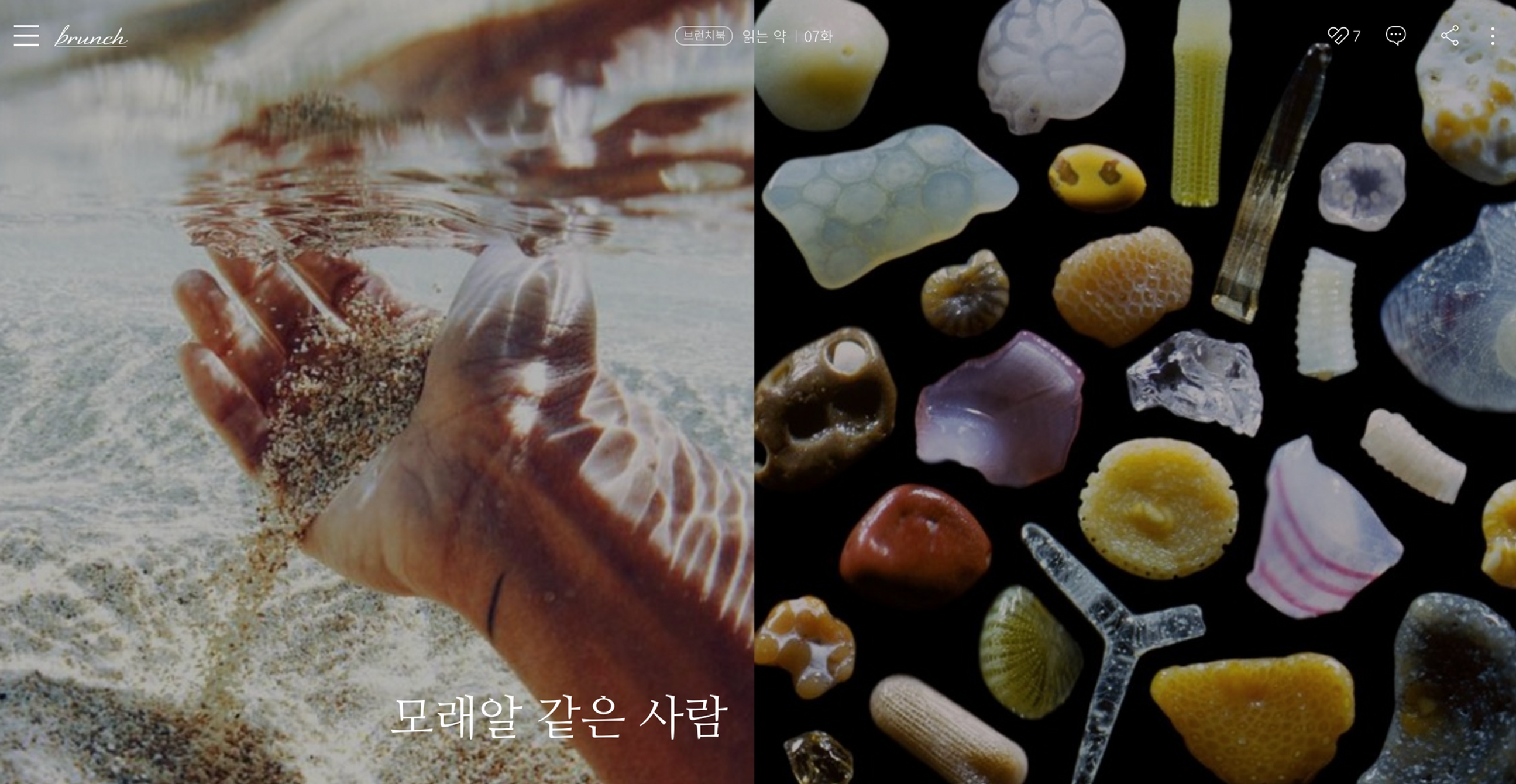
When people go to the beach, they look at the sea, the horizon. They gaze at the emerald water and the sun, which paints the world with rainbow hues as time passes. In that setting, the sand on the beach is merely a backdrop or supporting element—a place to put a beach chair, bury one’s legs, enjoy a sand bath, or where lovers carve their names. No one ever looks at it and exclaims, “Wow, look at this sand!”
But the story changes when you magnify it about 250 times under a microscope. Upon closer inspection, you realize that the most beautiful entities on even the most beautiful beach are undoubtedly the grains of sand themselves. If you magnify seawater, clouds, or the human body 250 times, you would only see things like bacteria, dead skin cells, microorganisms, dust, cigarette ash, and heavy metal particles. But the grains of sand finally reveal their true appearance, like hidden jewels.
Perhaps it’s the result of boulders enduring all kinds of pressure, friction, impact, erosion by water, weathering by wind, and heat from the sun over a long period. Each grain of sand has its own unique shape and story. They embody proof that the hardships that seemed coincidental and unreasonable were neither unreasonable nor coincidental at all. They prove that those arduous years existed so that they could become jewels, beautiful entities with unique colors and shapes.
With the eyesight of the human eye, one can only pass by them carelessly, perceiving them as ordinary and insignificant entities—just a light brown or ivory color, found anywhere in abundance. Not many people know that such sand possesses incredible beauty invisible to the naked eye. But once you know this fact, you can never look at sand with the same eyes and preconceptions. You have discovered their hidden—more essential—true form.
Doesn’t a similar principle apply to people? Statues made from large rocks freshly cut from a quarry, artificially carved and refined with money and effort, and impressive-looking stones gathered from nature, immediately capture people’s attention. They are also expensive. But they still don’t know what erosion, weathering, pressure, friction, or hardship are. It is only after their noses wear away and their necks subsequently break that these statues reveal their original form, as if confessing it. They end up confessing with their whole being that they had been standing there putting on airs despite not having been refined at all.
But what about the grains of sand, whose true form can only be seen with the eyesight of a god, magnified 250 times by the human eye? They have nothing more to fear or to feel pain from. Because they have already experienced everything. Because they have willingly endured all hardships with their whole being for a long time, becoming as low as they could possibly become. And then, we can confirm what happened to the grains of sand with the help of the microscope. We can see that those many grains of sand are finally sparkling with their own unique beautiful shapes and colors. Each sparkling grain, in unison, tells us in a quiet but clear voice the principles of the world: that there is no such thing as coincidence in this world; that the harder the times, the more you should strive to protect your true heart; that if you endure all hardships, you will find yourself transformed into a beautiful jewel.

Leave a Reply