
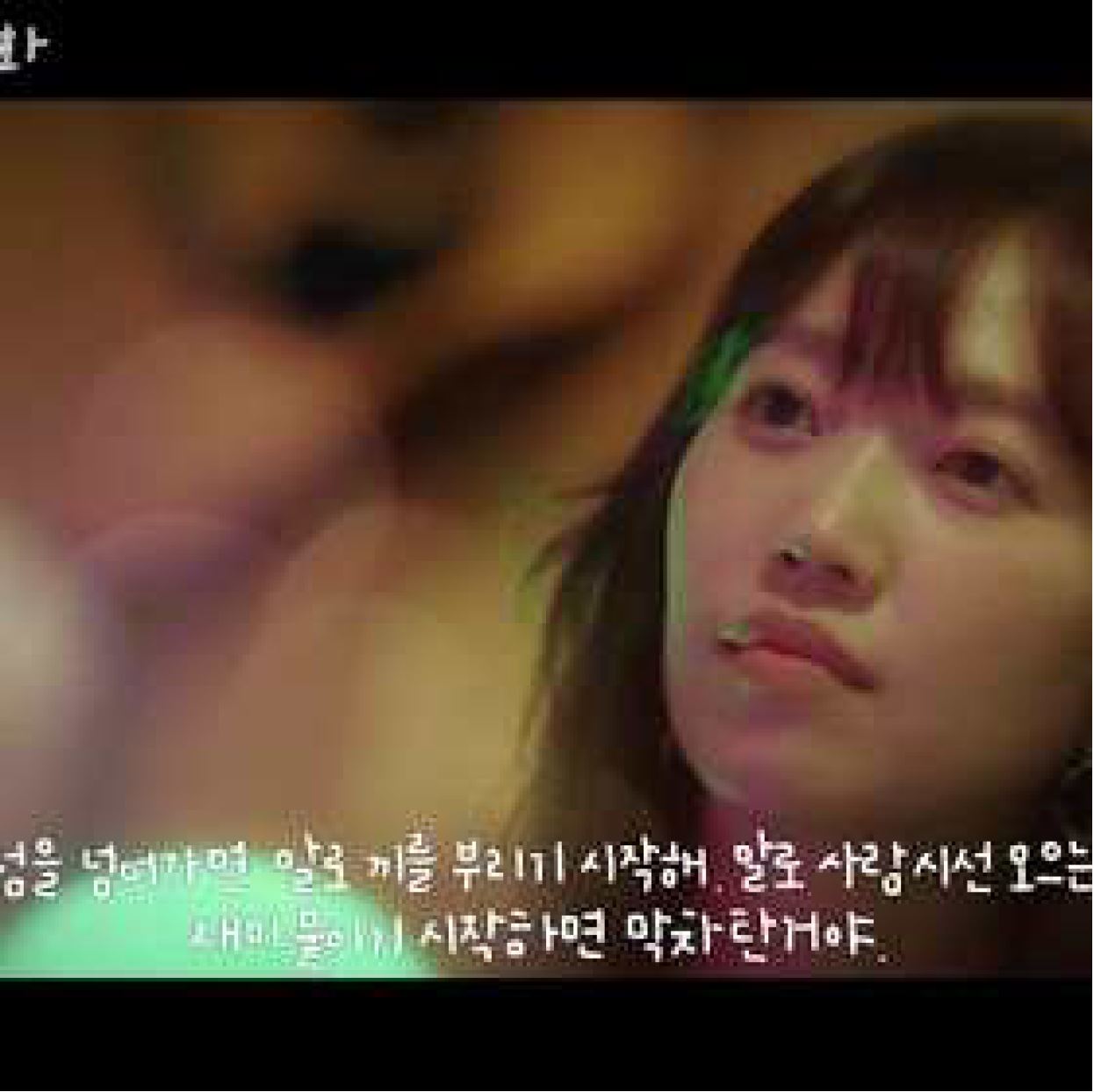
“Once you reach a certain point, you start playing with your words. And once you start to enjoy drawing attention to yourself with your words, there’s no turning back. Do you think there’s even a single thing coming out of my mouth that’s actually worthwhile? There isn’t. Not one. So, I don’t want you to ever reach that point. It feels like I’m taking a detour because I’m too afraid to walk on the right path. But I’ve come so far away that I can’t even dare to turn back. I like that you don’t try to get attention from people with your words. That’s why each and every word you utter is so special.”
– Hyun-ah’s line from the drama <My Liberation Notes> –
When you watch dramas by writer Eun-sook Kim, who has created numerous hits like <Lovers in Paris>, <Guardian>, and <The Heirs>, every line from the characters is filled with excitement, humor, deep resentment, and passionate love. They are full of flair, pulling the listeners in and then letting them go. On the other hand, the main characters in writer Hae-young Park’s works deliver their lines as if they’re pulling out a heavy bundle from deep within their chests, as if they’ve been carrying it for a long time. While there are many lines that resonate deeply with the heart, woven into the plot and context, there are no light, trendy phrases that could become popular catchphrases. Hae-young Park’s lines feel like they’ve been carefully polished and packaged over time, only to be casually dropped as if the character just picked them up while walking by. Or they feel like self-flagellation.
People who are known for being good with words or writing—with the exception of a few like writer Hae-young Park—share a common trait: they play with words. If you sift through their words and writing with a fine sieve, all that remains is the black pencil dust of self-praise: “I know this much,” “I’m this sophisticated,” “I’m this talented,” “I’m this empathetic,” “I’m this deep,” and therefore, “I’m amazing.” There’s no “righteousness” or “truth” in any of it.
I understand. If you want to play with words, it would be incredibly uncomfortable if the world had clear rights and wrongs and only one truth. If the truth is too prominent, there’s no room for me to stand out. If you stay true to the process of asking sharp, knife-like questions aimed at your own heart and drawing out honest, lean answers, there’s no room to play off.
That’s why I get it when people drag in quotes from well-known figures, adorn every word with flashy adjectives like a literary genius, or flaunt unnecessarily difficult terms that only critics use. I also understand why they meticulously filter out compelling anecdotes, like secret herbs in a pharmacy or dried squid in a fish market, to avoid getting caught. These materials make it incredibly easy to play off. You have to dazzle as many people as possible. And so, the people who play off and those who are dazzled by it all end up riding the last train together, racing toward a cliff. This is probably one of the most common, clichéd occurrences on this earth since the beginning of time.
Words and writing that contain pure “righteousness” and “truth” don’t suit the public’s taste. In fact, they make many people uncomfortable. They almost always make you think, “I was wrong,” “I’ve lived wrong,” “I’m a sinner.” But they don’t stop there—they also make you look toward peace, love, hope, and eternity. For this reason, righteousness and truth always become turning points in life for a minority, not the majority. They become a force that changes lives. When one person’s life changes, the world changes that much. Therefore, the words and writing that change the world are those filled with righteousness and truth, not showmanship.
On the other hand, words and writing that show off are like a heavily made-up woman on the street. They stimulate emotions with dangerous passion, unfounded guilt, baseless hope, twisted self-awareness, false intimacy, and the idolization of worthless things. They intoxicate you like alcohol and inflame the cells in unseen places. In the end, the woman on the street and her customer head down the path to ruin together.
Always aim for “righteousness” and “truth.” So, don’t play with words, and don’t be mesmerized by words that play off. Let’s not catch the last train.
Leave a Reply