
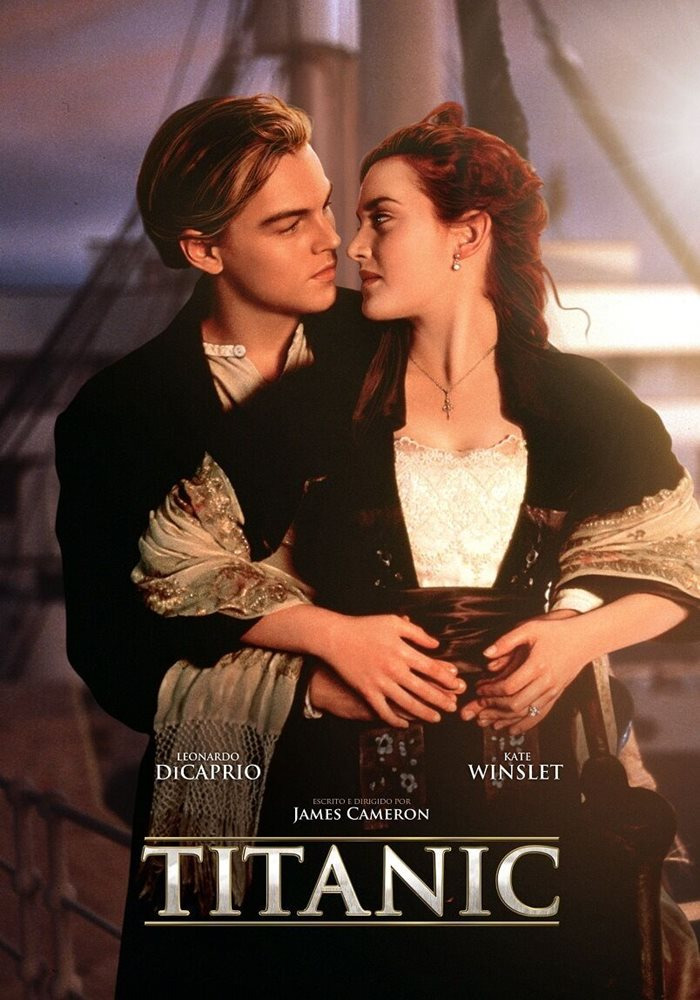
True Love as Felt While Watching Titanic as a Child
‘Ah, meeting a woman for whom I would willingly drown when a ship sinks is true love.’
This was what I thought when I first watched the movie Titanic, starring Leonardo DiCaprio, during my adolescence. The man was happy even as he died, believing he could save the woman he loved. The woman, who survived in place of the man’s sacrifice, never took another man into her heart for the rest of her life. Even after time passed and both were gone, their story remained in people’s hearts as perfect love. For example, if, by some chance, they had both survived and suffered from PTSD due to the sinking, and so the man drank and the woman took sleeping pills and antidepressants, occasionally fought like dogs, and eventually cheated on each other and broke up, that common story would be infinitely less perfect than their love.
The woman obeyed the man’s will to die in her place. If she were a feminist, she would have insisted on ‘equality’ and chosen who would die by drawing lots. If the man had said, “You must live. For my sake too. If I let such a beautiful you die and I’m the only one to live, I wouldn’t even be a man,” she would have deemed it ‘misogyny’ and reported him to the Ministry of Gender Equality and Family. On the other hand, young Korean men in their 20s with victim mentality might have said the opposite: “If it’s about gender equality, why should the man die in her place? That woman never paid for a single date. It’s obvious that if I die, she’ll pretend to be a tragic heroine for a while and then go out with other men and have fun. Why would I be crazy enough to die in her place? For whose benefit?” As women began to reject the virtue of ‘obedience,’ men began to reject the virtue of ‘sacrifice.’ As a result, only distrust and conflict overflowed.
Different Criteria for Choosing a Partner for Men and Women
The reason why women look at a man’s ‘ability,’ ‘intelligence,’ and ‘social status’ is to see if he is a man they can ‘trust and follow.’ They are evaluating whether he is a man they can trust and entrust with the role of ‘team leader’ of the family. That’s why women want a man who is at least ‘taller than me, more capable than me, smarter than me, more honest than me, and more diligent than me.’ If a woman intends to become the ‘team leader’ and lead the man, would there be a need to do so?
However, men do not have such criteria when choosing a woman. It doesn’t matter at all if she is less intelligent, less capable, smaller, or weaker. A man only needs a woman who ‘trusts, loves, and follows only me until the end.’ Then he thinks he can willingly dedicate his life, his very life. Such a man will not betray or starve his wife and children. He will not become a ‘patriarchal dictator’ who ignores his wife’s opinions and does as he pleases. Rather, he listens to his wife’s opinions more attentively than anyone else’s. But in important moments, he makes decisions as a leader. What if the man in Titanic had said to the woman, “What do you think about me dying in your place? I’ll do as you say. If you can’t decide, let’s flip a coin fairly”? Does that look like ‘respecting women’?
It is not right to develop logic based on the ‘default’ assumption that male police officers always guarantee public safety and male soldiers protect the borders from male soldiers of other countries. And then they assume that there will never be a burglar in their house, no ship will sink, there will be no car accidents, and there will never be a fire at home that causes the ceiling to collapse. They drive on roads built by men in cars made by men, enter buildings built by men, ride elevators made and installed by men, sit on sofas made by male carpenters, and then ask why women shouldn’t lead. Claiming they will break down all glass ceilings. Women can lead. They can bring in a younger, weaker, less intelligent, and less capable male ‘team member,’ marry him, and live while leading him well. No one will stop them. (If the parents are in their right minds, they would at least try to stop them. Living like that eventually makes you not look human.)
If you meet the right partner, the dating cost issue will never become a problem in any form. If a woman has the attitude to obey the man and the man has the attitude to sacrifice everything for the woman, they will not care about money. Because what they eat, see, and enjoy right now is not more important than gaining the other person. Rather, if the other person makes unnecessary excessive spending for the date, they will feel unpleasant as if their own money was wasted. If they envision a future together, they will consider all expenses from the perspective of having already combined their livelihoods.
Looking around, you can see that it’s almost impossible to predict what someone will be like in five years. Comfortable times like a piece of cake can come, but suddenly, blizzards can rage. It’s impossible to predict what situation someone will be in 5 or 10 years later. They might have become penniless, contracted cancer, be rich but in prison, or become so rich that they’ve started another family. Yet, there are people whose feelings fluctuate depending on who pays for the date in a relationship that leads to marriage. I hope they come to their senses before it’s too late.
If You Can’t Transcend Self-Interest, It’s Not Love
There is no concept of self-interest in love. In a relationship without love, the point where you feel like you are at a slight loss is the equilibrium. Because the other person feels the same way. Therefore, a business relationship at equilibrium inevitably harbors conflict like magma in a volcano. They feel hurt by everything. It would be strange if they didn’t, since they both feel like they are making sacrifices. Love where the concept of self-interest exists is ultimately nothing more than a partnership.
But when you fall in love, what is mine becomes the other person’s. Since it’s no longer mine, there is no need or way to measure whether it’s a loss or gain. The more clearly the measurement is made, the more clearly it means that what is mine and what is yours are separated, and that means there is no love. If they quibble over gains and losses from material things, they will certainly not sacrifice their lives. They certainly will not betray each other. It’s fortunate if they don’t push each other off the deck of a sinking ship after taking out life insurance. Whether man or woman, you must meet the right person, and before that, you must become a proper human being who knows what love is. A relationship where they fight over dating costs, love where they calculate gains and losses, has no future.
Leave a Reply